Wednesday, November 4, 2015

What the Tech... Daily Integration?

Take a moment to think about classrooms in the previous century. Adults nowadays are able to get a feel for what their former classrooms and even perhaps their parents' former classrooms were like through movies and documentaries. Think now about classrooms in the 19th century, about the materials and modus operandi in classrooms of the time before our grandparents. Most people forget that books were rare and pictures in them were rarer, that blackboards and chalk were luxuries and that teacher training, when it first emerged, was minimal. If teachers were allowed to travel forward a century in time to observe classrooms and teaching practices, the reactions would likely be varied and strong. Some would likely be excited, some would likely be confused about how certain things were supposed to happen, and some would likely be upset by future standards which were different from those of their own time. But if they could peek into the students' minds and see what connections were being made and how features of future classrooms were facilitating learning, I think the best teachers would (if reluctantly) favor the methods and tools which promoted such advances for the students.
This is not to say that they would find the implementation and use of those methods and tools to be easy. In the 21st century, there is wide spectrum of ability and acceptance among teachers when it comes to using modern technological advances in a classroom. But in general, if teachers are reluctant to implement the use of technology in their classroom on a daily basis, this is usually due to either lack of consistent availability of the technologies or to lack of understanding about them. These would probably be the greatest obstacles to a curriculum with maximum technology integration. It would take an investment of time and money to train teachers to use the tools the schools purchases to their maximum potential, as learning to use a SmartBoard, for example, is not as simple as learning to use a whiteboard was for our educational predecessors. Teachers must also remember that a power outage could thwart their plans for a technology-saturated class, and might want a few back-up options as well. However, daily integration of technology in the classroom would provide students with the consistent practice they need to master 21st century skills, both technical and cognitive. The teachers might struggle with planning and preparing integrated classes initially, but as with present classroom elements that were once new, teachers will learn how they can be useful until there comes a point that doing without them seems absurd.
I think that appropriate integration according to grade level and student ability is necessary. For example, I could have a 1st-Grade class use an children's dictionary software, but have a high-school class use Britannica Online. The high-schoolers could research articles on a certain topic on Google, but elementary school students should research for an assignment using a teacher-approved search engine. These are things that can and should be done every day, and some lessons will have more potential for technology use than others. But the attitude teachers show towards technology will be reflected in the students' abilities, and if the goal is to give them the best possible preparation for the rest of their lives, technology should definitely have a major part in that.
If teachers nowadays could peek at technology 100 years from now, I don't doubt that there would still be mixed feelings. But it's highly likely that education without technology will be seen as unthinkable, and it would be interesting to see how education itself will be affected. The trend is towards independent discovery by the students with support from the instructors, and in 100 years this concept may be taken to currently unimaginable heights. But if the students are the better for it, both in terms of knowledge and cognitive abilities, so much the better.


Tuesday, November 3, 2015

What the Tech... eBooks in the Classroom?

Changes to the world in education can come in what seem like waves, some larger than others. Electronic technology would be like the tsunami with a never-ending wave train, a significant wave being the use of electronic books, or eBooks. The greatest resistance to this innovation seems to be more financial than ideological. Basically, if students can only purchase eBooks from the school, they must have the physical technology needed to access them. Many school districts are implementing the use of iPads or tablets, which the students are able to take home for studying and homework purposes. But not all have the same resources, nor do all the families at any one school have the same financial circumstances. If a student's family cannot afford the school's electronic materials, the student misses out on learning at worst, and runs the risk of standing out in the class for negative reasons at best. Now, if all students had the same access to eBooks, other drawbacks may present themselves, such as health issues that science has not yet discovered and copyright infringement. But the advantages are as obvious as they are many. A primary one is that this may be a more environmentally sound method to distribute literature, as no paper would be needed for publishing. The way eBooks are put together is also innovative, as authors include links to videos, embed hyperlinks to websites and Internet resources, and children's readers come with all kinds of interactive features. This makes for more engaging reading and deeper exploration of content. eBooks are also easier for teachers to use, as they can be pulled up on SmartBoards, marked and highlighted in real time with the students, and accessed from more than one location. Also, the content of the book remains intact despite the conditions of its vehicle: while a worn-out book can become illegible, an eBook can be accessed from a smartphone or computer if anything happens to a student's iPad. For myself, I think that as many readers, textbooks and workbooks as possible should be electronic. I would have my students do their homework (yes, even writing, which can be done with a stylus on a tablet device) in an electronic workbook that I could access and make notes on in real time, read stories and chapters of books electronically, and explore the work of several experts at once through the site links in textbooks. I think this approach would both help make the material engaging and interesting for the students and strengthen their usage skills with technology, giving them that much more capability for riding technology waves successfully into whatever the future brings.

What the Tech... iPads in the Classroom?

"Oh what extravagance! What a waste of such sophisticated technology on such young children!" Similar comments were heard in the halls of a private school in a third-world country, as the teachers learned that the school's curriculum for the next year would include the use of iPads, and that the school would be purchasing an iPad for each of the children. I could understand the sentiments of my colleagues, as I knew what they were really trying to say: It's not that they didn't want the students to use iPads in the classroom, but they felt the school was not focusing their resources on the right aspects of the school. The teachers' salaries were barely over the required minimum wage, and the fact that the school was instead investing in purchasing new expensive equipment, as well as in training the teachers in how to use it, was frustrating. But as time went on, the advantages of the iPads in the classroom became apparent.
The usefulness of the iPads in the classroom is due more the apps that it has rather than just the apparatus itself. Sure, it's mobile and has a touchscreen, but the quality of the apps and their availability make a difference in whether they will enhance or detract from the lesson. The school in the opening story purchased the necessary software to implement a bilingual curriculum with supporting workbooks and materials. But that did not stop the teachers from researching free apps that had educational merit and using those they found effective with their students. Aside from apps, the iPads allow access to the Internet without the bulk of a computer, making it a facilitator of research. It can also be used to read stories and textbooks that have been published electronically, and these often come with interactive features like imbedded videos and websites.
A few disclaimers about iPads: most students seem to associate iPads with games, and may initially want to find what games are available, and get to work on downloading their favorites. As with most technology, there is always the potential for distraction and security breaches in the classroom. But with the proper safeguards, these can be minimized to allow the students to benefit from the iPads as an educational tool. The school in the opening story allowed only the teachers to take home the iPads, but allowing the students to take them home could be seen as both necessary (for homework assignments) and costly (if the iPads should be damaged). Schools which have implemented the use of iPads have had the parents purchase insurance to help safeguard against such losses.
While the iPads in the school I used to work at took some getting used to, both for the teachers and the students, with training and patience, both now consider them invaluable tools in their classrooms. I find that I would agree with them, and would like to use them as often as possible in any future classrooms I work in. For example, teaching a math class in which the students could watch videos about geometric principles at their own pace (or with a partner), being able to use both physical manipulatives and electronic ones from an app on the iPad, and completing exercises on an electronic worksheet that includes manipulative images and numerical answers, which could then be shared with the class via a SmartBoard connected to each iPad, seems more time-efficient, engaging to the students and environmentally friendly (less paper) than a class without an iPad. Although I think that financial issues (such as teachers' salaries, school budgets and the students' socioeconomic status) should be considered, using iPads in the classroom would not only enhance the students' learning experience, it would also help them acquire 21st-century skills with using technology.


What the Tech... Skyping in the Classroom?

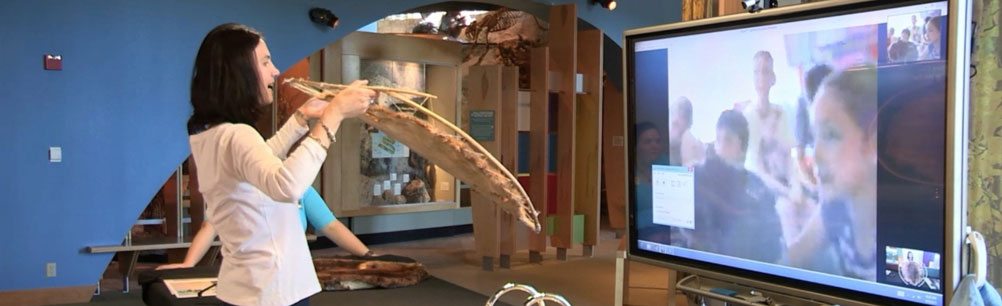
Whenever a TV series episode starts in an elementary school classroom, I get nervous, especially when the TV series is not about elementary school and about solving crimes. This was the case when I was watching "Castle" a few years ago, and I braced myself emotionally for the impending catastrophe. But as it turned out, the youngsters were merely witnesses to a crime instead of its victims. This is because they witnessed the murder of a supposed explorer to Antarctica while interfacing with the person via a video conference. Such an experience is not ideal in any classroom, but the episode got me thinking about the possibilities of using Skype and other video-calling tools to enrich a school curriculum and the students' learning.
A key advantage to using these tools in the classroom would be the connection that the students would make between the academic material they are learning about and life outside the classroom. For example, they could interview with professionals in a variety of fields who would show how academic knowledge is implemented into the everyday workings of their careers and demonstrate its importance. Another advantage would be that these communications could help students begin thinking about future careers, which is especially important for high school students and students of lower socioeconomic status. An insider's understanding of the job would help them determine the importance of going to college, and would motivate them on a college preparation path in high school. The more obvious in-class benefit is simply getting to know about areas of interest to the topic and the class without having to bring a speaker into the class setting or having to move the class to where the speaker is. This makes it possible for the class to follow a world explorer and see live images of interesting sites (if they are not providing fake services, of course), or to interact with political figures or writers or scientists from around the world. Some important drawbacks would be the time invested in preparing for a video conference, the availability of the guests of choice, and last-minute cancellations. Teachers must also consider that a speaker whom they are not familiar with might not make an engaging presentation, or the material might be presented in a way that is too complex for them to understand. There is also the ever-present concern of the speaker behaving appropriately (or of being shot live).
I find this avenue intriguing, and would be willing to use it to help provide the above-mentioned advantages to my students. I would be very excited to use it in a language arts or writing class, by having the students speak with a writer whose work is of interest to the students or is being studied in class. They could discuss story content, writing techniques, story line ideas, careers in writing, the many component's of a professional writer's professional life, the importance of research, and many other topics. I think it would make the class content come alive for the students, and it would provide real-life material that could be referred back to as an example of concepts that are presented in class.


What the Tech... Facebook and Twitter?

The many-way avenues of social media are still a controversial topic in many circles, especially
among educators when it comes to employing them in the classroom. These electronic tools were not designed with classroom instruction in mind, but they have made the exchange of information via the Internet an instantaneous and rapid process. Social networking sites in particular, which have less obvious instructional uses than other media avenues, are still considered questionable, but as with all classroom tools, their potential effectiveness may lie in how the teachers structure their use and present that to the class.
The rapid flow of communication and the plentiful content on social media such as Facebook, Twitter and Instagram can be addicting, to the point that most schools do not allow their use on school property because of their capacity for distraction. They have also received mostly negative news coverage in the educational world, as they are often avenues for cyberbullying and other reprehensible (or even just questionable) practices among young people. There is also the ever-present threat of a breach in security or privacy, as these media are open to public use unless certain safeguards are available and applied. For these reasons and possibly others, many parents also have restrictions on their children's usage of social networking at home,the common of which is simply not providing them with a smartphone. But the potential of social media in productive activities such as awareness campaigns and charitable endeavors are also well-known, and the level of popularity of these tools among the next generations of learners can make them effective teaching tools. They can help to engage the students while also adding a dimension of real-time communication and feedback to the learning. It would also give the less vocal students in a class an avenue for expression which they might be more comfortable using.

Several educators and schools are adopting an "if-you-can't-lick'm-join'm" approach to social media in a classroom environment. They would seem to be most effective for parts of a lesson that require student communication among themselves and with the teacher. One possibility would be for a teacher to create a class Facebook page on which class discussions would take place about the given topic, allowing students to post relevant articles and pictures, thus enabling them to build a group base of knowledge on the topic. This could also be done after school hours, giving the teacher more time to focus on the material in class. Field trips may also make use of social media, as the teacher could have students take photos and post them to a class Instagram  account for later discussion (provided, of course, that the venue of the field trip permits photo taking). Teacher monitoring of such pages would be fundamental, but the community that could be built around academic topics could help the students to understand the relevance of these topics to life outside the classroom.